
Author: Scott Elliott

Kansas Teen Driver Rules, Explained: Permit at 14, License at 15, Full Privileges at 17

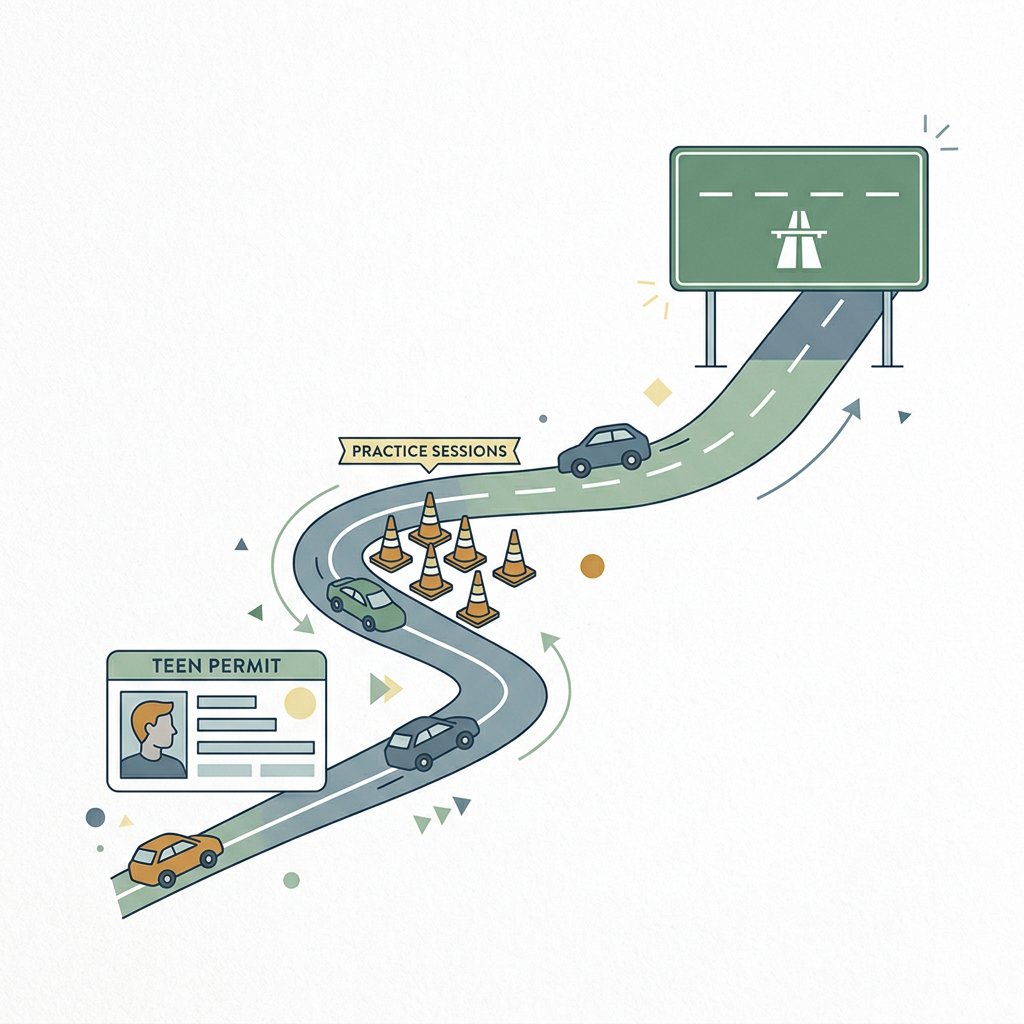
Illustration of a teen permit and a winding road with practice cones leading to a highway sign

If your teen just started asking about driving, you’ve probably discovered that Kansas doesn’t hand out licenses all at once. The state uses a graduated driver’s license (GDL) system, which means new drivers earn freedom in stages. We’ve been helping Johnson County families through this process since 1999, and these are the questions parents ask us most.

Stage 1: The instruction permit (age 14)

Your teen can get an instruction permit at 14 with your approval. With a permit, they can drive only when a licensed adult age 21 or older is in the front seat. Phones are off-limits behind the wheel, except to report an emergency or illegal activity.

The permit is also when the clock starts. To move to a restricted license, your teen needs to have held a state-issued permit for at least one full year.

Stage 2: The restricted license (age 15)

At 15, your teen can apply for a restricted license if they have:

  • Held their instruction permit for at least one year
  • Completed an approved driver education course
  • Logged at least 25 hours of supervised driving
  • Your approval as a parent

A restricted license lets your teen drive to and from school and work by the most direct route, and to religious activities. They can drive anywhere, anytime, with a licensed adult 21 or older. They can’t carry non-sibling minors as passengers.

Before your teen turns 16, you’ll also need to submit the 50-hour affidavit, a signed statement that they’ve completed 50 hours of supervised practice.

Stage 3: Less restricted privileges (age 16)

At 16, with the 50-hour affidavit on file and a clean record, your teen moves up. They can drive alone between 5 a.m. and 9 p.m., plus to and from work, school activities and religious services at any hour. They can carry no more than one non-sibling passenger under 18.

Stage 4: Full privileges (age 17)

Restrictions end at 17, or after six months with less restricted privileges, whichever comes first, as long as your teen has followed the rules.

Where driver’s ed fits in

Driver education is required for a restricted license at 15. Completing a course also matters later: the state accepts a driver education completion certificate in place of the vision, written and driving tests when your teen moves up a stage.

Our course includes 16 hours of classroom instruction and 6 hours behind the wheel with a certified instructor, all completed within 120 days. Many families time it so their teen finishes right around the one-year mark on their permit.

The bottom line for parents

The GDL system works because it adds freedom gradually. Your job is to make sure the practice hours are real, varied and logged. Ours is to give your teen a strong foundation before they ever drive alone.

Ready to plan ahead? View our upcoming class sessions and pick a start date that lines up with your teen’s permit anniversary.

Source: Kansas Department of Revenue, Graduated Driver License Requirements. Rules can change, so check KDOR before your teen applies.
Halloween Driving Tips for Teen Drivers (and the Parents Riding Along)

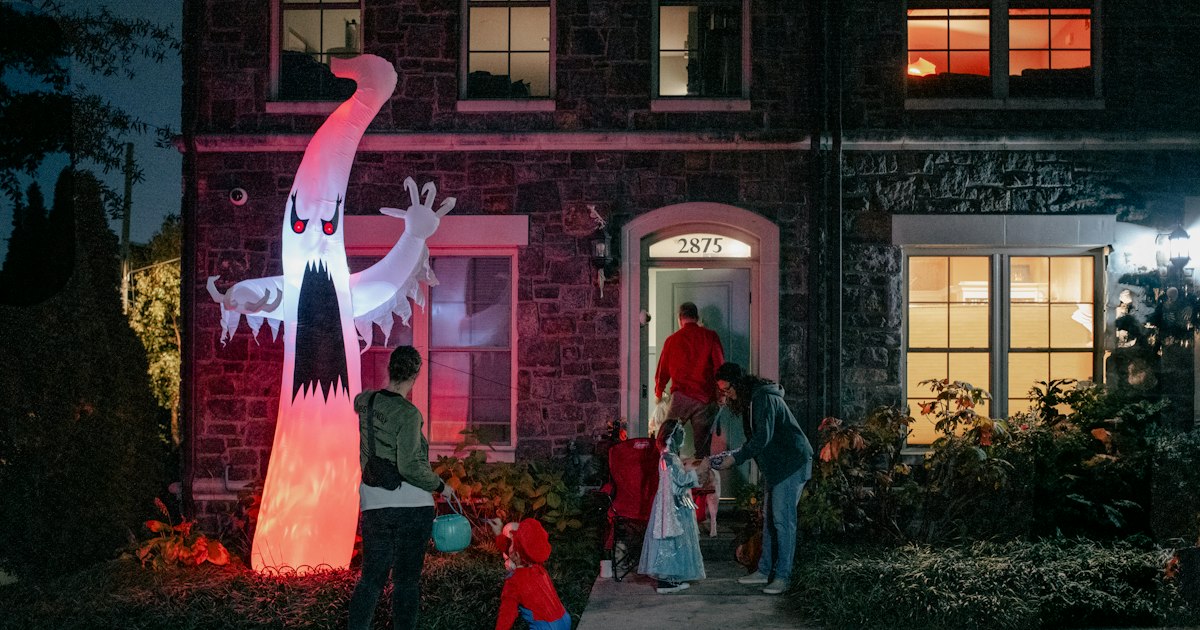
Family trick-or-treating at a decorated house at night

Halloween falls on a Saturday this year, which means neighborhoods across Johnson County will be packed with kids from late afternoon into the night. For a new driver, it’s one of the trickiest evenings of the year. A little planning makes it a safe one.

Why Halloween night is different

  • Kids cross mid-block and dart out between parked cars, not just at corners.
  • Dark costumes and masks make children hard to see and limit their own view of traffic.
  • Trick-or-treaters are focused on candy, not cars.
  • It gets dark early, and drivers get distracted looking at decorations.

Halloween driving tips for teens

  1. Slow way down in neighborhoods. Drive well below the posted limit so you have time to stop.
  2. Turn your headlights on early, even before it’s fully dark.
  3. Scan between parked cars, driveways and curbs. Expect someone small to step out.
  4. Back out of driveways slowly, and check behind you twice.
  5. Put the phone away. Kansas teen permit and restricted license holders can’t use a phone while driving except to report an emergency.
  6. Never pass a stopped car. It may be letting kids out.
  7. Skip neighborhood shortcuts during peak trick-or-treat hours if you can.

Know your license limits

Halloween parties and plans can collide with Kansas teen driving rules:

  • Instruction permit: a licensed adult 21 or older must be in the front seat.
  • Restricted license (15): driving is limited to school, work and religious activities, and you can’t carry non-sibling minors. Driving friends to a party isn’t allowed.
  • Less restricted privileges (16): you can drive alone from 5 a.m. to 9 p.m. (plus work, school activities and religious services), with no more than one non-sibling passenger under 18. Many parties run past 9.

For parents

An early-evening drive together on Halloween is great practice, and it counts toward the 50 supervised hours Kansas requires. Talk through the plan ahead of time, and offer a ride home so your teen never feels pressure to break the rules.

One more reminder

Clocks fall back on Sunday, November 1, so evening drives get dark an hour earlier. Now is a good time to practice night driving together.

Want your teen to learn hazard awareness from a pro? View our upcoming class sessions.

Source: Kansas Department of Revenue, Graduated Driver License Requirements.

Getting a Replacement Social Security Card


Kansas requires proof of a Social Security Number to get a permit or license. To fulfill this requirement, you either need to present an original Social Security Card or a Tax Return (that displays your full SSN). If you have misplaced or lost the card, no need to worry you can get a replacement one for free. To get a replacement Social Security card in Kansas, you can follow these steps:

  1. Go to ssa.gov/number-card/replace-card
  2. Complete the Application: Fill out the Application for a Social Security Card (Form SS-5). This can be filled out on the website or you can download the form and fill it out.
  3. Gather Required Documents: You will need to provide documents to prove your identity, age, and U.S. citizenship or lawful immigration status. Keep in mind if you are replacing a minor’s card, the parent will also have to prove their identity as well. Examples of acceptable documents include a U.S. passport, birth certificate, or Certificate of Naturalization.
  4. Submit Your Application: Take your completed application and original documents (or copies certified by the issuing agency) to your local SSA office. Make sure to also bring a proof of identity document for yourself, such as a driver’s license or passport.
  5. Wait for Your Card: After submitting your application, your replacement Social Security card should arrive by mail within 10-14 business days.
  6. Important Information: There is no fee to get a replacement Social Security card. Also, the SSA limits the number of replacement cards you can receive to three per year and ten per lifetime.

How to Log Student Driving Hours

Kansas teenagers are required to drive a minimum of 50 practice hours with an adult (21+) before they can receive their full license. Luckily, there is a free and convenient app, “Road Ready”, that will track the time for you. All you have to do is download it on your phone and before you start driving turn it on. It will log and keep track of all your drive time. The app is available on the Apple App Store and Google Play Store.

Download it today at: roadreadyapp.com

Scheduling an Appointment at Kansas DMV

To schedule an appointment at the Kansas Department of Motor Vehicles (DMV), you can follow these steps:

  1. Go to https://getinline.kdor.ks.gov/WebAppt/en/WizardAppt/AppointmentTypes?groupBy=0
  2. Select “Out of State Transfer or 1st Time Issuance – No Required Testing”
  3. Select your DMV location
  4. Select an available date and time
  5. Provide the required personal information, such as your name and contact details
  6. Double-check the appointment details to ensure accuracy, and confirm your booking
  7. Take note of the appointment date, time, and any additional instructions provided by the Kansas DMV.

Remember, appointment availability may vary, so it’s recommended to schedule your DMV appointment well in advance to secure your preferred date and time. If you need further assistance or encounter any issues, consider consulting the Kansas DMV website for FAQs or reaching out to their customer service directly.